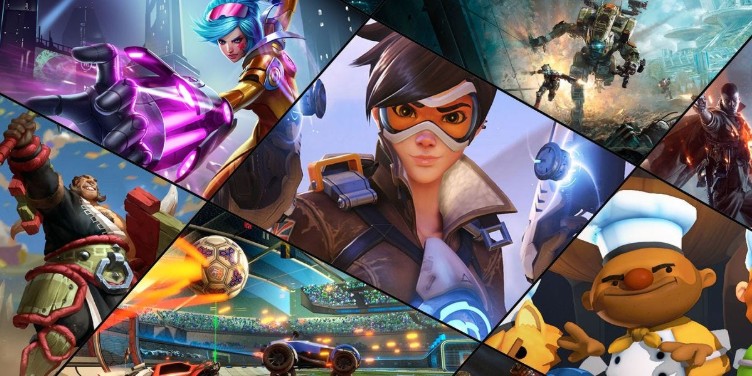
There’s a quiet transformation that happens every time you dive into an online game. It’s not always visible, and it rarely gets the spotlight, but it’s there your brain adapting, sharpening, and learning to solve problems with a level of precision that might surprise you. What starts as entertainment slowly evolves into a mental training ground, where every challenge becomes an opportunity to think like a pro.
From the perspective of a beginner, online games often feel overwhelming at first. The controls, the rules, the pace it can all seem like too much. But that’s exactly where the magic begins. Your brain is forced to make sense of unfamiliar situations. You start observing patterns, recognizing cause and effect, and experimenting with different approaches. Maybe you fail the first few times. Maybe more than a few. But each attempt teaches you something new. Over time, what once felt chaotic starts to feel structured. Problems become puzzles, and puzzles become solvable.
For the casual player, this learning process feels natural, almost invisible. You’re not sitting there thinking, “I’m improving my cognitive skills.” You’re simply trying to win, to progress, to enjoy the experience. But behind the scenes, your brain is doing something powerful. It’s building connections, strengthening memory, and improving your ability to process information quickly. You begin to anticipate outcomes, react faster, and make decisions with more confidence.
Step into the shoes of a competitive slot gacor gamer, and the intensity rises dramatically. Here, problem-solving is not optional it’s essential. Every second counts. Every move has consequences. You’re constantly analyzing the situation: Where are your opponents? What strategy are they using? What’s the best counter? This level of thinking requires a blend of logic, intuition, and experience. It’s not just about reacting; it’s about predicting.
From a strategic point of view, online games are masterclasses in planning and adaptation. You learn to think several steps ahead, much like a chess player. In many games, success depends on how well you manage resources, position yourself, and anticipate future challenges. This kind of forward-thinking trains your brain to approach problems methodically. Instead of reacting impulsively, you begin to consider multiple possibilities and choose the most effective path.
Then there’s the social dimension one of the most underestimated aspects of online gaming. In multiplayer environments, problem-solving becomes a shared responsibility. From a team player’s perspective, the challenge is not just to find the right solution, but to communicate it effectively. You need to explain your ideas clearly, listen to others, and adapt your plan based on team dynamics. This collaborative problem-solving builds skills that are incredibly valuable in real life, from workplace teamwork to everyday communication.
Looking at it from a psychological angle, online games provide a safe space to fail. And that’s crucial. In many real-world situations, failure can feel intimidating or even paralyzing. But in a game, failure is expected. It’s part of the process. This changes your relationship with mistakes. Instead of fearing them, you start to embrace them as learning opportunities. You analyze what went wrong, adjust your strategy, and try again. This mindset is at the heart of professional-level problem-solving.
Creativity also plays a major role. Not every challenge in a game has a clear or obvious solution. Sometimes, the best approach is the one no one else has tried. From the perspective of a creative thinker, games are like open-ended playgrounds where experimentation is encouraged. You might combine tools in unexpected ways, take unconventional paths, or develop unique strategies. This kind of thinking breaks you out of rigid patterns and helps you see problems from new angles.
Emotionally, online games can be intense. High-pressure situations test your ability to stay calm and focused. Imagine being in a moment where one wrong move could cost the entire match. Your heart races, your mind speeds up, and yet you have to remain composed. This is where emotional control becomes part of problem-solving. Learning to manage stress, avoid panic, and think clearly under pressure is a skill that extends far beyond gaming.
From a real-world perspective, the benefits of this mental training are hard to ignore. The ability to quickly assess situations, adapt to change, and find effective solutions is valuable in almost every field. Whether you’re a student tackling complex assignments, a professional managing tight deadlines, or an entrepreneur navigating uncertainty, these skills make a difference. Gamers slot luar negeri often find themselves better equipped to handle challenges because they’ve practiced similar scenarios countless times in virtual environments.
There’s also a deeper layer to this transformation the development of a growth mindset. Online games teach you that improvement is always possible. No matter how difficult a level or how skilled your opponents are, there’s always a way to get better. This belief drives continuous learning. You start seeking feedback, watching others play, and refining your techniques. Over time, this mindset shapes how you approach challenges in all areas of life.
From a storytelling perspective, every gaming session becomes a journey of problem-solving. There are obstacles to overcome, strategies to develop, and victories to achieve. You are both the player and the thinker, constantly navigating a world that demands your best. Each success feels earned, not just because you won, but because you figured it out.
Perhaps the most powerful aspect of online gaming is how it makes all of this enjoyable. Unlike traditional forms of learning, which can sometimes feel repetitive or forced, games engage you through excitement and immersion. You’re motivated to keep going, to keep improving, to keep solving. And in doing so, you’re training your brain in ways that feel effortless but have lasting impact.
In the end, online games are more than just a pastime. They are dynamic systems that challenge your mind, push your limits, and develop your ability to think like a pro. They teach you to analyze, adapt, collaborate, and innovate all essential components of effective problem-solving.
So the next time you log in and pick up your controller, remember this: you’re not just playing a game. You’re training your brain to think faster, smarter, and more strategically. You’re learning to face challenges head-on and find solutions with confidence. And with every level you conquer, you’re not just leveling up in the game you’re leveling up in life.

